Hugo Spritz Recipe: How to Make the Perfect Elderflower Spritz
The Hugo Spritz is a light, floral cocktail with Prosecco, elderflower, sparkling water, mint and lime. Get the ideal measurements, variations and expert tips.
The Hugo Spritz is a refreshing sparkling cocktail made with Prosecco, elderflower liqueur, soda water, fresh mint and lime. To make one, fill a large wine glass with ice, add 40 ml elderflower liqueur, 60 ml chilled Prosecco and 60 ml sparkling water, then stir gently and garnish with mint and lime.
Light, floral and gently citrusy, it is a softer alternative to the bittersweet Aperol Spritz. It takes about five minutes and requires no cocktail shaker.
Quick Hugo Spritz Recipe
- Preparation time: 5 minutes
- Difficulty: Easy
- Serves: 1
- Glass: Large wine glass
- Method: Build directly in the glass
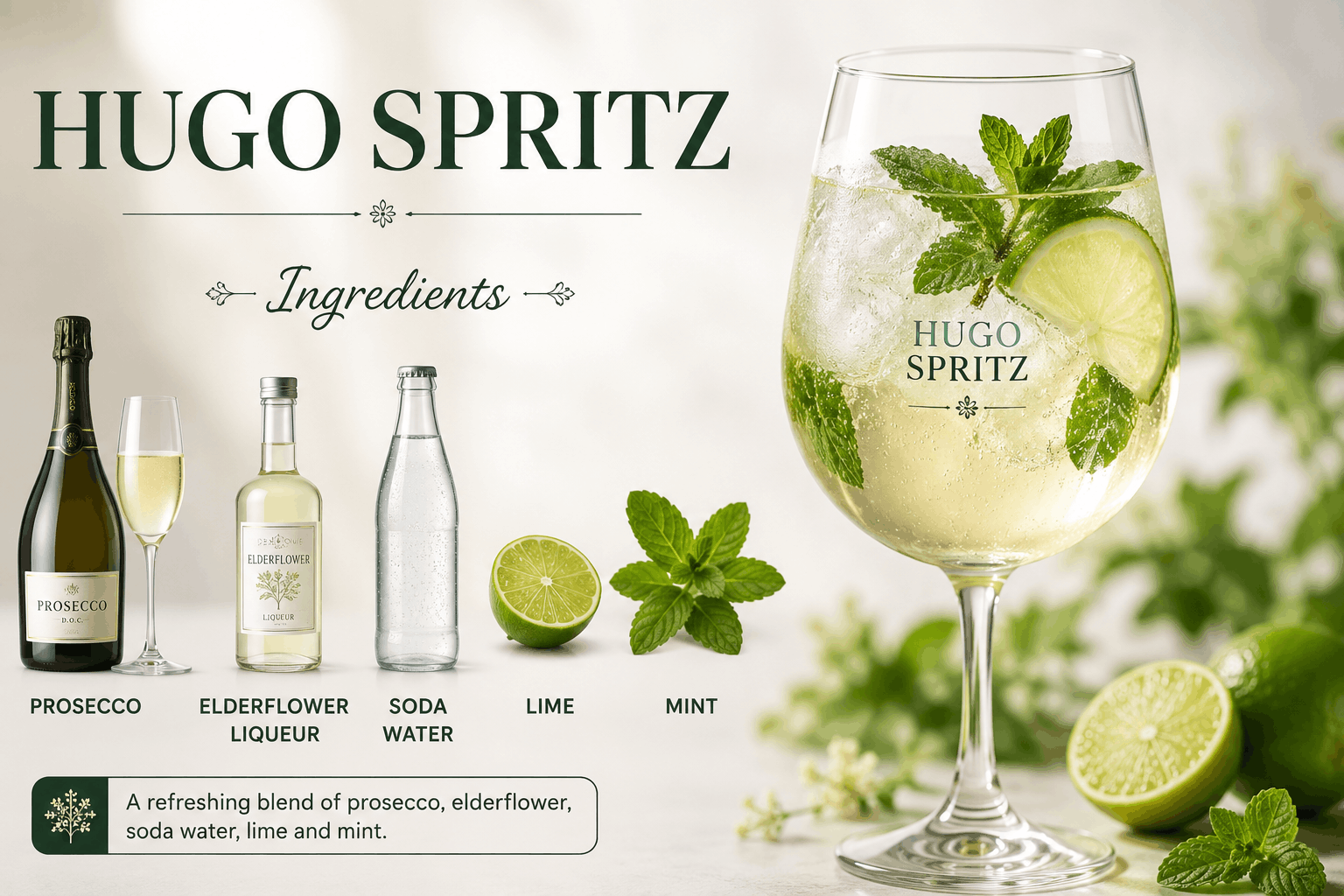
Hugo Spritz Ingredients
- 40 ml elderflower liqueur
- 60 ml chilled Prosecco
- 60 ml chilled sparkling water or club soda
- 8-10 fresh mint leaves
- 1 lime wedge or wheel
- Plenty of ice
How to Make a Hugo Spritz
- Fill a large wine glass generously with ice.
- Add the fresh mint leaves.
- Pour in the chilled Prosecco and sparkling water.
- Add the elderflower liqueur.
- Stir once or twice with a bar spoon.
- Garnish with a mint sprig and lime wedge.
The 40 ml elderflower liqueur, 60 ml sparkling wine and 60 ml sparkling water formula is also used in St-Germain's published Hugo Spritz recipe.
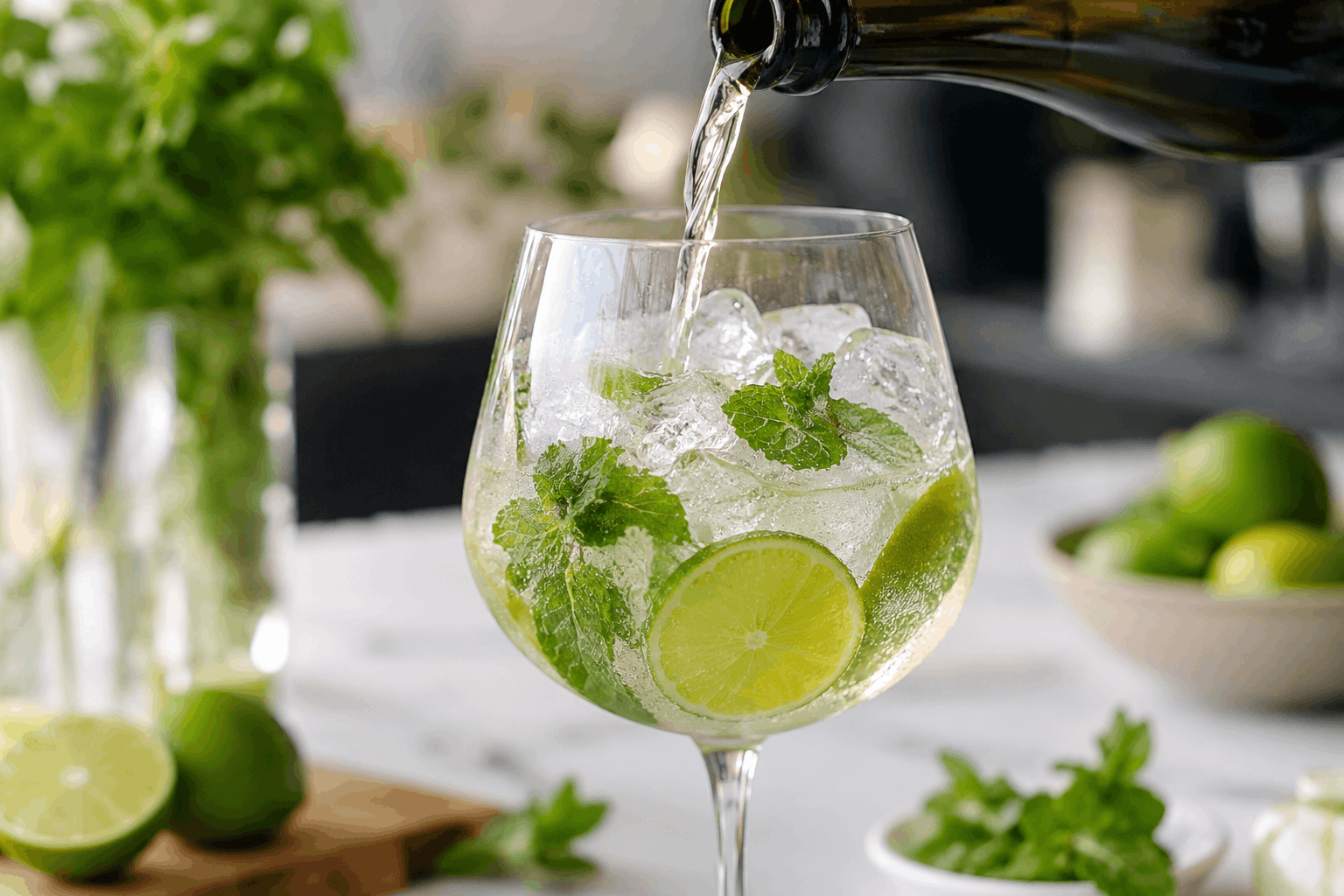
What Is a Hugo Spritz?
A Hugo Spritz is a sparkling elderflower cocktail from northern Italy. The modern version combines Prosecco, elderflower liqueur or syrup, sparkling water, mint and citrus over ice. Unlike the orange, bittersweet Aperol Spritz, Hugo is pale, floral, herbal and comparatively delicate.
The drink is widely associated with bartender Roland Gruber, who created an early version in South Tyrol in 2005 as an alternative to the Venetian spritz. The original reportedly used lemon balm syrup before elderflower became the common choice.
What Does a Hugo Spritz Taste Like?
- Floral from elderflower
- Crisp and fruity from Prosecco
- Fresh and herbal from mint
- Lightly tart from lime
- Clean and fizzy from soda water
It is usually sweeter and less bitter than an Aperol Spritz, but it should never taste syrupy. Dry sparkling wine, plenty of ice and enough soda keep the drink bright.
The Secret to a Better Hugo Spritz
The secret is controlling aroma, temperature and dilution rather than adding more elderflower. Clap the mint once between your hands to release aromatic oils without bruising it. Aggressive muddling releases bitter, grassy flavors and leaves fragments in the drink.
- Chill every liquid before preparing the cocktail.
- Use large, solid ice cubes and fill the glass.
- Pour Prosecco gently down the side of the glass.
- Stir only once or twice to preserve carbonation.
A full glass of ice can dilute more slowly than a few rapidly melting cubes because it keeps the drink colder.
Elderflower Liqueur or Elderflower Cordial?
Elderflower Liqueur
Liqueur adds floral aroma, sweetness, alcohol and a rounder texture. Choose it for a richer, stronger and more luxurious drink. St-Germain is the best-known example, but other elderflower liqueurs work too.
Elderflower Cordial
Cordial is a sweet, non-distilled concentrate suited to lower-alcohol and alcohol-free versions. Because it can be more concentrated than liqueur, start with 15-20 ml, taste and add more only if needed.
What Is the Best Prosecco for Hugo Spritz?
A dry, lively Prosecco works best. Look for Brut, Extra Brut, Prosecco DOC or DOCG. Despite its name, Extra Dry can taste sweeter than Brut, so reduce the elderflower when using it.
There is no need for an expensive vintage bottle: mint, citrus, elderflower and soda reshape its character. Cava, Crémant or another dry sparkling wine also works. Explore more cocktails you can make at home in the Glugtail library.
Hugo Spritz Ratio
A reliable starting point is 1 part elderflower liqueur + 1.5 parts Prosecco + 1.5 parts soda water. For a drier and more wine-forward drink, use 1 part liqueur + 3 parts Prosecco + 1.5 parts soda.
Sweeter Hugo
40 ml elderflower liqueur, 90 ml Prosecco and 45 ml sparkling water.
Lighter Hugo
20 ml elderflower liqueur, 75 ml Prosecco and 75 ml sparkling water.
More Floral Hugo
40 ml elderflower liqueur, 60 ml Prosecco and 45 ml sparkling water.
Common Hugo Spritz Mistakes
- Using warm ingredients: they melt ice quickly and flatten the bubbles.
- Over-muddling mint: hard crushing creates bitterness and an untidy drink.
- Stirring too much: excessive movement releases carbonation.
- Using too much elderflower: it should perfume the drink, not dominate it.
- Adding too little ice: a lightly filled glass warms quickly.
- Pouring Prosecco aggressively: pour down the side to preserve bubbles.
Hugo Spritz vs. Aperol Spritz
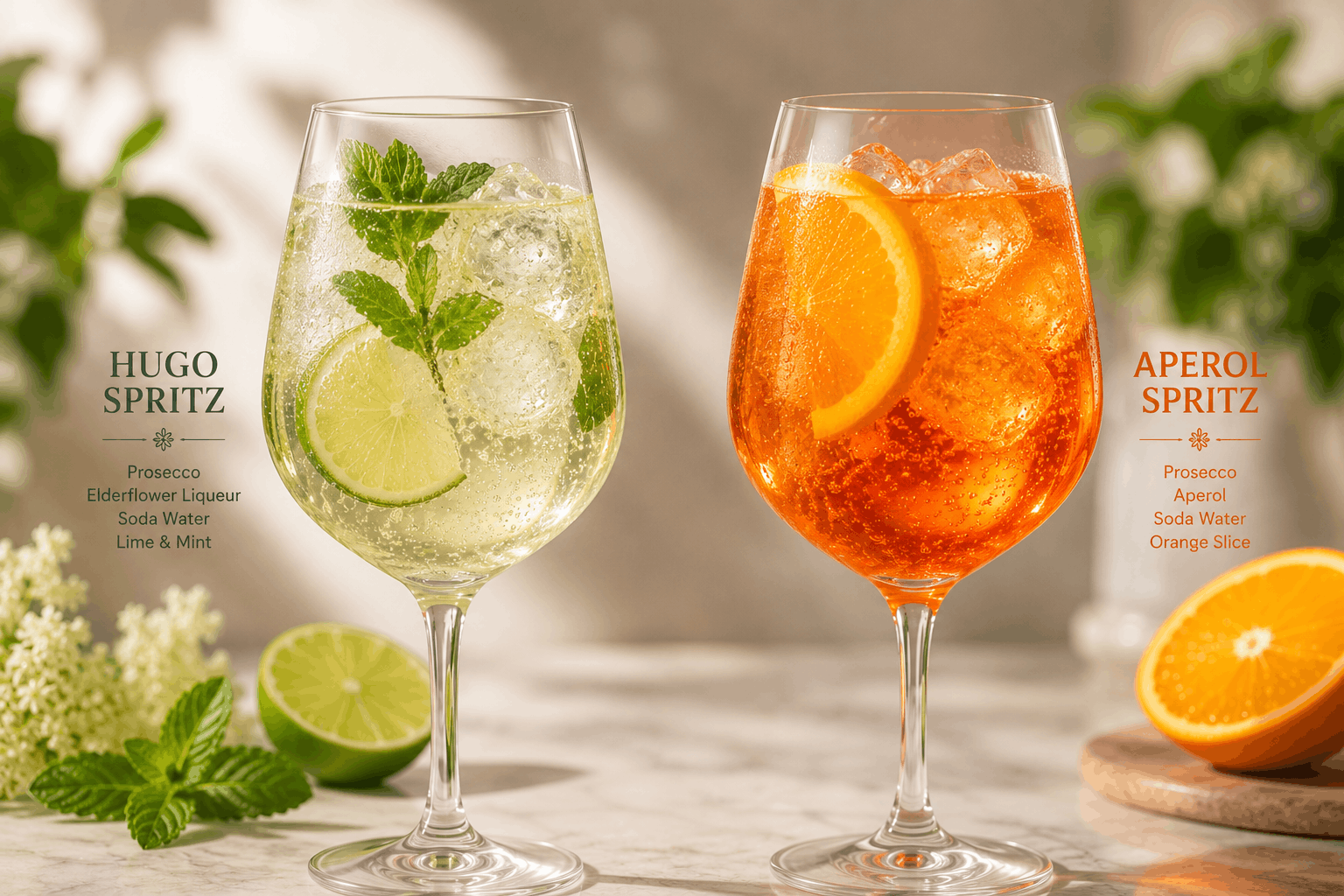
- Main flavor: Hugo is floral and herbal; Aperol is bittersweet and citrusy.
- Color: Hugo is pale green or clear; Aperol is bright orange.
- Key ingredient: elderflower in Hugo, Aperol in the classic alternative.
- Garnish: mint and lime versus an orange slice.
- Character: fresh and delicate versus bold and bittersweet.
Choose Hugo for a cooling floral cocktail. Choose the Aperol Spritz when you prefer orange, herbal and bitter flavors.
Hugo Spritz Variations
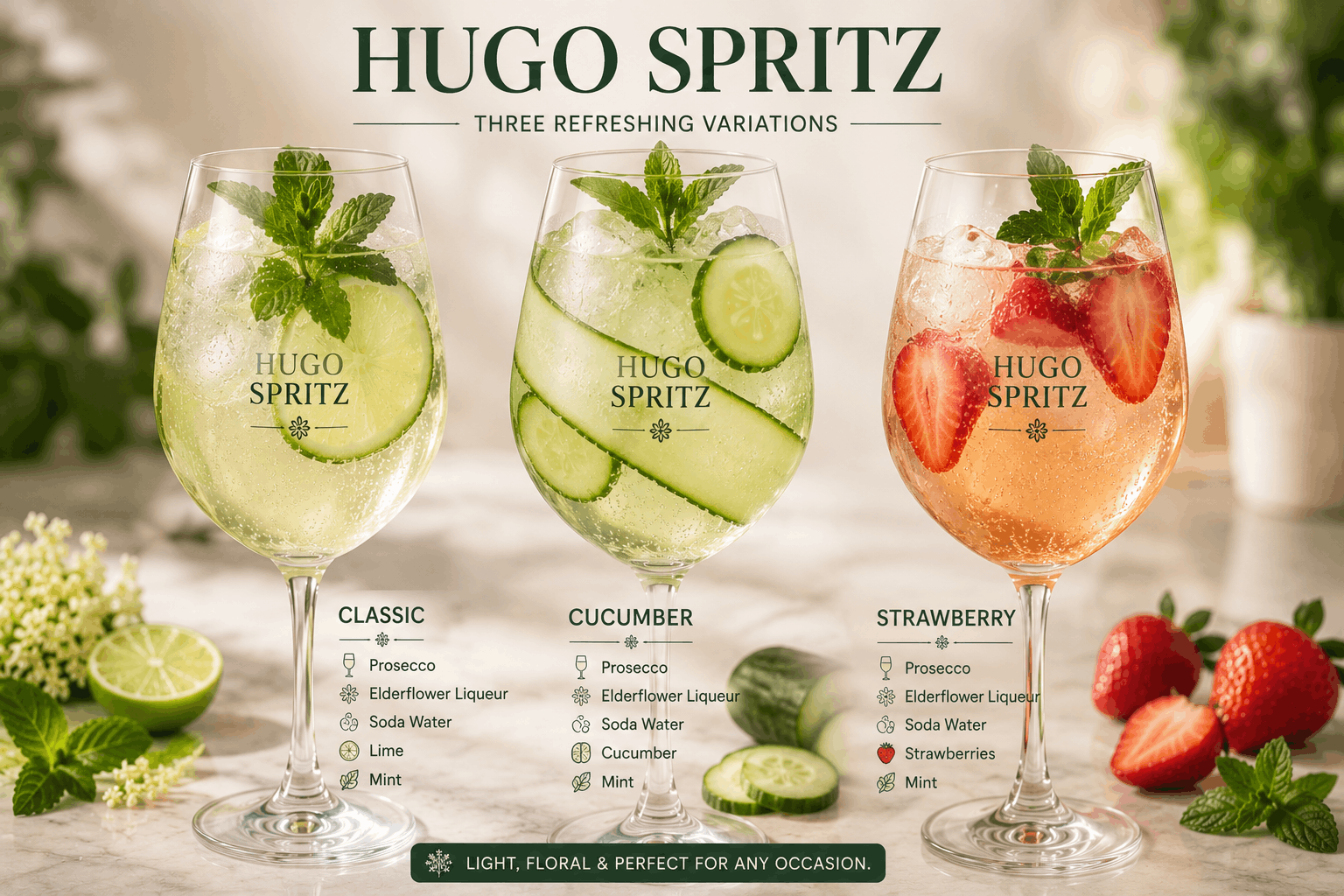
- Cucumber Hugo: add three thin cucumber ribbons before the ice.
- Strawberry Hugo: add two sliced strawberries and press one gently.
- Limoncello Hugo: replace 15 ml elderflower liqueur with 15 ml limoncello.
- Gin Hugo: add 20 ml dry gin and slightly reduce the elderflower.
- Rosé Hugo: replace Prosecco with sparkling rosé.
- Frozen Hugo: blend frozen grapes, elderflower and a little soda, then top with Prosecco.
How to Make a Hugo Spritz Pitcher
For approximately six servings use 240 ml elderflower liqueur, 360 ml Prosecco, 360 ml sparkling water, two sliced limes and two generous handfuls of mint.
- Chill every ingredient.
- Add lime, mint and elderflower to a large pitcher.
- Add Prosecco immediately before serving, then top with soda.
- Stir gently and pour into ice-filled glasses.
Keep ice in individual glasses instead of the pitcher so the batch does not dilute while guests arrive.
Non-Alcoholic Hugo Spritz
Build 20 ml elderflower cordial, 90 ml alcohol-free sparkling wine and 60 ml sparkling water over ice. Add mint and lime, then stir gently. For a simpler version, replace the alcohol-free wine with tonic or sparkling grape juice and reduce cordial if the mixer is sweet.
What to Eat with a Hugo Spritz
Its floral sweetness and lively acidity suit fresh, salty and creamy foods: green olives, artichokes, prosciutto, burrata with tomatoes, goat cheese crostini, smoked salmon, grilled shrimp, light seafood pasta, herb flatbread and fresh fruit with soft cheese.
Avoid very sweet desserts and extremely spicy dishes, which can flatten or overpower the delicate elderflower aroma.
When to Serve a Hugo Spritz
Hugo works especially well for summer lunches, garden parties, poolside gatherings, brunch, sunset drinks, weddings, aperitivo hour and outdoor dinners. Its pale color and fresh garnish also make it visually appealing for events.
Final Verdict
The Hugo Spritz combines sparkling wine, elderflower, mint and lime in a drink that feels celebratory without being heavy. Use chilled ingredients, dry Prosecco, plenty of ice and a restrained amount of elderflower. Handle mint gently and avoid excessive stirring.
Turn the ingredients you already have into your next cocktail. Choose your bottles, mixers and garnishes, then let the Glugtail AI Bartender build a personalized recipe.
Frequently Asked Questions
What is in a Hugo Spritz?
A Hugo Spritz typically contains Prosecco, elderflower liqueur or cordial, sparkling water, fresh mint, lime and ice.
Is a Hugo Spritz sweet?
It is lightly to moderately sweet. Brut Prosecco, less elderflower and more sparkling water create a drier version.
Can I make a Hugo Spritz without St-Germain?
Yes. Use another elderflower liqueur, cordial or syrup, starting with less cordial because it can be more concentrated.
What is the difference between a Hugo Spritz and an Aperol Spritz?
Hugo is floral, minty and lightly citrusy, while Aperol Spritz is bittersweet, orange-forward and more herbal.
Can I use Champagne instead of Prosecco?
Yes. Champagne, Cava, Crémant or another dry sparkling wine can replace Prosecco, although each changes the flavor.
Do you muddle mint in a Hugo Spritz?
Press mint very gently or clap it between your hands. Aggressive muddling can produce bitter, grassy flavors.
Can I make Hugo Spritz in advance?
Prepare the elderflower, lime and mint base early, but add Prosecco, sparkling water and ice immediately before serving.
Is there a non-alcoholic Hugo Spritz?
Yes. Combine elderflower cordial, alcohol-free sparkling wine, sparkling water, mint, lime and ice.
What can you make with your ingredients?
Add your home bar ingredients to My Bar and instantly see ready recipes and one-ingredient-away matches.
Keep exploring
- Lucca Spritz Recipe: Light and Social Aperitif Style
Create a Lucca Spritz-inspired cocktail with sparkling freshness, low-intensity bitterness, and easy summer serving tips.
- Spicy Margarita Recipe: Jalapeño, Mango & Mezcal Variations
Make a spicy margarita with jalapeño, fresh lime and tequila, plus easy mango and mezcal variations, heat-control tips and food pairings.
- Negroni Cocktail Recipe: Classic Balance Guide
Learn how to make a balanced Negroni at home with the right ratios, garnish tips, and serving ideas inspired by top cocktail bars.
- Best Spring Cocktails
Discover 5 refreshing spring cocktails full of bright and floral flavors. From Elderflower Spritz to Strawberry Basil Smash, these drinks are perfect for enjoying the fresh taste of spring.